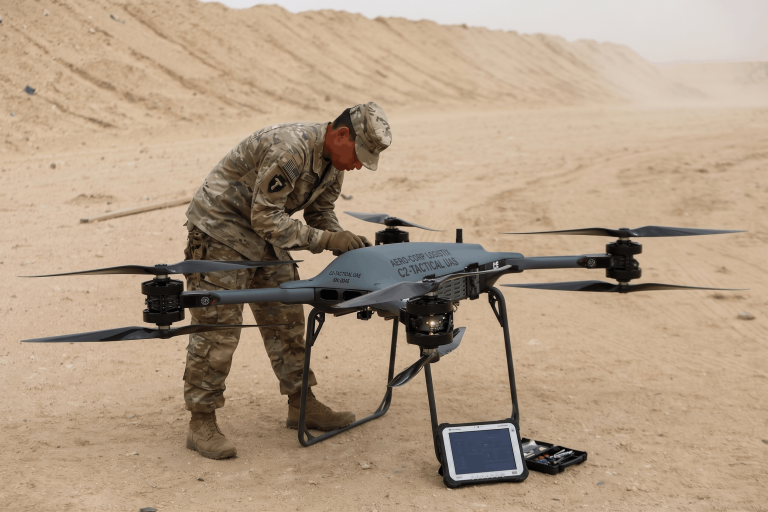
Quadcopters rely on electric propulsion motors working together with precision. Each motor must deliver consistent torque, speed, efficiency, and thermal performance across rapid throttle changes, repeated flight cycles, and varying load conditions. Motomea’s Inertial Dynamometer System (IDS) enables engineering, production, and qualification teams to test quadcopter motors under controlled load conditions, helping validate motor performance before flight. The IDS measures how each motor behaves under realistic operating demands, including acceleration, deceleration, sustained load, thermal rise, power consumption, and efficiency. For quadcopters, where even small motor differences can affect stability, endurance, payload performance, and flight control, this level of testing is critical.

Why Quadcopter Motor Testing Matters
A quadcopter depends on balance between all four propulsion motors. If one motor performs differently from the others, the aircraft may compensate through the flight controller, drawing more power, reducing flight time, increasing heat, or creating instability.
IDS testing helps identify these differences before integration.
Motomea’s IDS can be used to test and compare quadcopter motors for:
By testing motors before flight, UAV teams can better understand whether each motor meets the required performance profile for the aircraft.
Motomea’s IDS can be used to test and compare quadcopter motors for:
By testing motors before flight, UAV teams can better understand whether each motor meets the required performance profile for the aircraft.
How IDS Works for Quadcopter Motor Testing
Motomea’s Regenerative Dynamometer System (IDS) applies a controlled load to the motor being tested and measures performance across defined operating conditions. The motor is connected to the dynamometer and operated through programmed test profiles, allowing teams to evaluate:
For quadcopter applications, IDS can simulate:
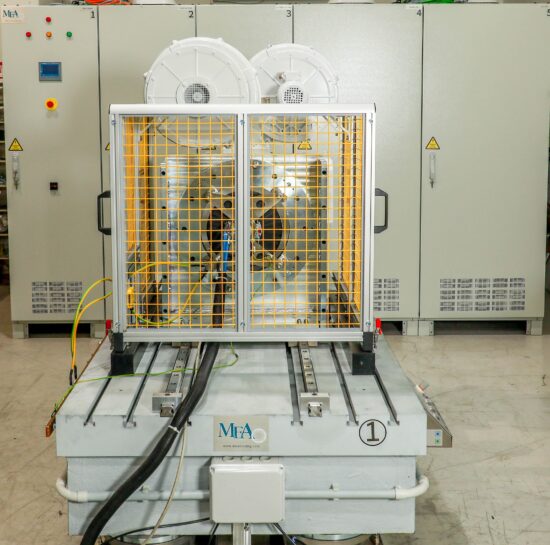
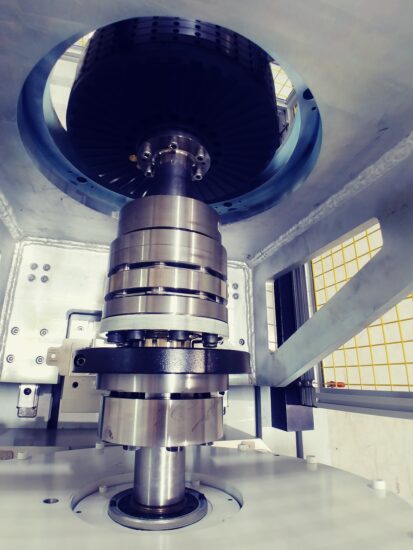
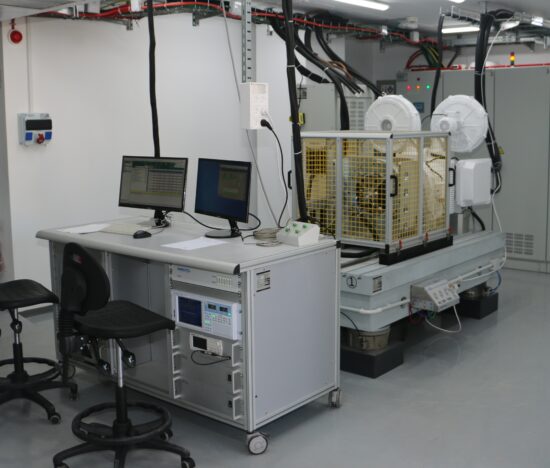
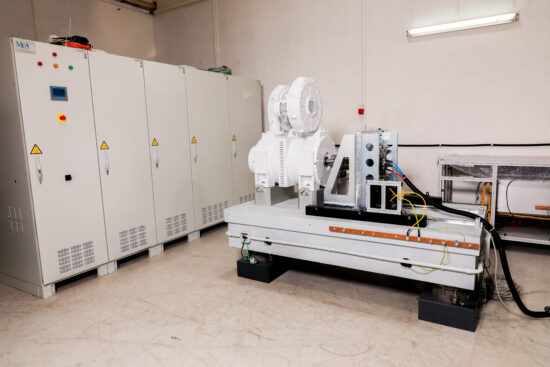
Photos of the Customer’s system at their facilities:
For quadcopter applications, IDS can simulate:
Because quadcopters depend on four motors working together, IDS testing can also compare motor sets and identify variation between units, suppliers, or batches. Teams can evaluate differences in efficiency, thermal behavior, torque response, controller matching, and early signs of mechanical or electrical defects.
Unlike traditional load testing systems that dissipate energy as heat, Motomea’s IDS is designed to recover energy during testing and return it to the electrical supply. This makes it useful for R&D, supplier qualification, production testing, endurance validation, high-volume motor comparison, and failure analysis.
Built for UAV and Quadcopter Teams
Motomea’s IDS is designed for teams that need accurate, repeatable electric motor testing for demanding propulsion applications.
For quadcopter manufacturers, UAV developers, aerospace engineers, and defense mobility teams, IDS testing provides the controlled load data needed to validate motor performance before flight.
Whether testing one motor, comparing four matched motors, qualifying suppliers, or validating production units, Motomea gives teams the ability to measure how motors perform under real operating demands.
Ready to elevate your motor testing and predictive maintenance strategies? We're here to help. Whether you have questions about our solutions, need personalized advice, or want to explore partnership opportunities, we're just a message away. Connect with us today to unlock the full potential of your operations and drive success in the world of motor testing and predictive maintenance. Let's innovate together!
Thank you for your submission! Your brochure is on the way!